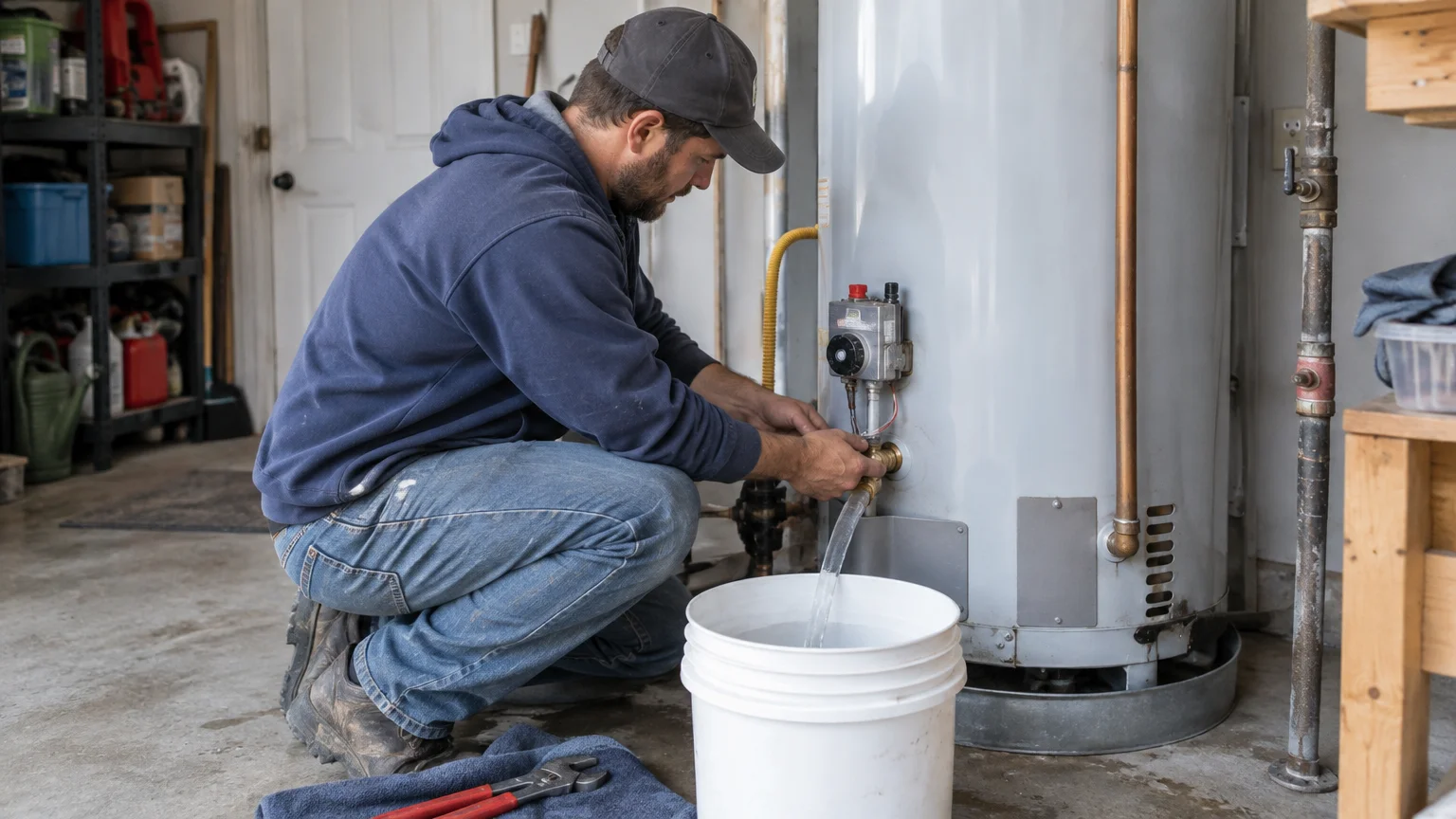
Most tank water heaters should be flushed about once a year. The right schedule depends on water quality, hot-water use, and the tank’s condition. Learning how often to flush a water heater can reduce sediment, protect heating parts, and help you find leaks before the unit fails.
A water heater may run quietly for years before making popping sounds or losing hot-water capacity. Sediment often causes these changes. Rockford Plumbing helps homeowners and property owners decide when maintenance, water heater repair, or water heater replacement makes sense.
How often should you flush a water heater?
Most tank water heaters need flushing once each year. This removes loose minerals and dirt from the bottom of the tank. Homes with hard water may need service more often than homes with cleaner water.
Household use also affects the schedule. A large family, busy rental home, or small business may use much more hot water. More water moving through the tank can leave more sediment behind over time.
Why manufacturers commonly recommend annual flushing
Sediment is material that settles from water and collects inside the tank. It may include minerals, sand, and other small bits. A thick layer can sit between the heat source and the water. This makes the unit work harder to heat the same supply.
Annual flushing gives a plumber a chance to remove loose buildup. It also allows someone to check the drain valve, pressure relief valve, connections, and anode rod. An anode rod is a metal part that helps protect the tank from rust. Anode rod replacement may help protect a tank when this part is worn.
How water quality and household usage affect timing
Hard water can create scale faster. Scale is a hard mineral coating that sticks to heating parts and pipes. Cloudy water, repeated heating issues, or visible sediment may mean the home needs a different maintenance plan.
Tenants and property owners should report changes early. A unit that runs out of hot water quickly, leaks, or makes loud sounds needs attention even before its normal flush date. In Rockford, local water conditions and building use can both affect the best schedule.
What happens if you do not flush your water heater?
Skipping maintenance can let sediment build at the tank’s bottom. The unit may heat water unevenly, make more noise, and take longer to recover after heavy use. In severe cases, buildup can reduce useful tank space and strain heating parts.
Sediment does not always mean the water heater needs replacement. A qualified technician can inspect the unit and decide whether flushing, repair, or another service fits. The tank’s condition matters more than one missed visit.
How sediment affects heating performance and capacity
A thick sediment layer can block heat from reaching the water. Gas water heaters may need longer burner cycles. Electric water heaters may have stressed or damaged heating elements. Both types can use more energy while producing less hot water.
Sediment can also move through the tank during use. It may clog a valve or collect in a faucet aerator. Cloudy hot water, weak flow, or repeated rumbling sounds should lead to a closer inspection.
What warning signs mean a water heater needs attention?
A water heater needs checking when its sound, temperature, or operation changes. Watch for these signs:
- Water around the tank, drain valve, or nearby connections
- Rust-colored hot water from more than one fixture
- Popping, banging, rumbling, or cracking sounds during heating
- Hot water that runs out much sooner than before
- Sudden temperature changes at the tap
- A gas pilot light that will not stay lit
A leaking tank differs from a leaking connection. A loose fitting or valve may be repairable. Corrosion through the tank usually means replacement. Emergency Plumbing may be needed when water spreads, the unit is unsafe, or the home lacks reliable hot water.
How do you flush a tank water heater safely?
A routine flush starts by stopping the heat source and connecting a safe drain hose. Water must flow to an approved drain area. The steps vary between gas and electric units. Anyone near hot water, gas, electricity, or a pressure valve should follow the manufacturer’s instructions.
What are the main steps in a routine flush?
A basic flush usually follows this order:
- Turn off the gas control or electrical power.
- Let the water cool before opening the drain.
- Close the cold-water supply valve above the tank.
- Attach a hose to the drain valve and place it safely.
- Open a hot-water tap to release pressure.
- Open the drain valve and empty the tank.
- Briefly open the cold-water supply to loosen leftover sediment.
- Close the drain, refill the tank, and restore power or gas only when full.
Water from the hose may be hot and contain sharp mineral pieces. A drain that cannot handle the flow may overflow and harm floors or walls. An electric unit must be full before power returns, or its heating elements may fail.
When should a professional plumber handle flushing?
A homeowner can inspect the area, check for visible leaks, and read the owner’s manual. Simple upkeep includes keeping stored items away from the unit. Watching for sound, temperature, and water changes is also safe. Homeowners do not need a professional for these basic checks.
Gas controls, electrical wiring, damaged valves, and leaking tanks need more care. A homeowner should not work on these parts without proper training. If gas smells like rotten eggs, leave the area and contact the gas utility or emergency services from a safe place. Do not test a leak with a flame or use nearby switches.
A plumber for water heater can inspect stubborn sediment, failed valves, unsafe venting, leaks, and tankless systems. Tankless water heaters do not flush like storage tanks. They often need a manufacturer-approved descaling process instead.
Should you flush or replace your water heater?
Flushing is often the first choice when a tank has no serious leak and still supplies dependable hot water. Repair may help when the problem involves a valve, heating element, thermostat, pilot part, or connection. An inspection can show whether the issue is small or points to tank failure.
When is maintenance or repair the better choice?
Maintenance or repair may suit a unit that still heats water but has mild noise, lower output, or visible buildup. The choice depends on part condition, tank corrosion, access, and long-term plans. Regular care can help a sound tank remain useful, but flushing cannot repair a tank that has rusted through.
Tankless systems may need cleaning, filter care, flow checks, or sensor repair. Tankless water heater installation may be useful during a planned upgrade. The home still needs suitable gas, electrical, venting, and water connections. Water heater installation should match the building’s hot-water demand and local safety rules.
When do age, damage, or efficiency concerns point to replacement?
Water heater replacement becomes more likely when the tank leaks from its body or has widespread corrosion. It may also make sense when the system needs repeated major repairs or cannot meet the property’s hot-water needs. Consider household size, fixture use, space, fuel type, venting, and future plans.
A new tank model offers familiar storage and steady hot water. A tankless system supplies hot water on demand but may need changes to fuel supply, wiring, venting, or water flow. Rockford Plumbing can help Rockford property owners compare these choices based on the home and its needs.
Key takeaways
- Most tank water heaters need flushing about once each year.
- Hard water and heavy use may require a different schedule.
- Sediment can cause noise, slow heating, and less hot-water capacity.
- Homeowners can handle simple checks, but gas, electrical, and leak work needs care.
- A leaking or badly corroded tank often needs replacement instead of flushing.
Frequently Asked Questions
Can a water heater be flushed too often?
Routine flushing is usually safe when it follows the manufacturer’s instructions. However, opening an old drain valve can reveal a problem or cause a leak. A plumber should assess a tank with heavy corrosion, a stuck valve, or a history of leaks before flushing.
Does flushing fix a water heater that makes popping sounds?
Flushing may reduce popping or rumbling caused by loose sediment. It may not fix noise from a damaged heating element, burner issue, pressure problem, or failing tank. Ongoing noise, weak hot water, or leaks call for an inspection.
Should a tankless water heater be flushed?
Yes. Tankless systems may need periodic descaling to remove mineral deposits from the heat exchanger. This process differs from flushing a storage tank and should follow the manufacturer’s directions. Water quality, flow, and system use affect the timing.
What should a homeowner do when there is no hot water?
A homeowner can check for power, look at the breaker, and check the normal pilot status on a gas unit. Do not open gas controls or electrical panels without training. If these simple checks do not help, water heater repair can find the cause.
Conclusion
Knowing how often to flush a water heater can help protect hot-water performance and find problems early. Annual service is a useful starting point, but water quality, usage, unit type, and warning signs may change the schedule. Maintenance helps when the tank is sound, while leaks and serious corrosion often require replacement.
For guidance on flushing, water heater repair, or replacement, Rockford Plumbing can help.
If you are not sure what you are dealing with, it is worth having someone look at it before it turns into a bigger job. Get in touch with Rockford Plumbing today and we will tell you where you stand.