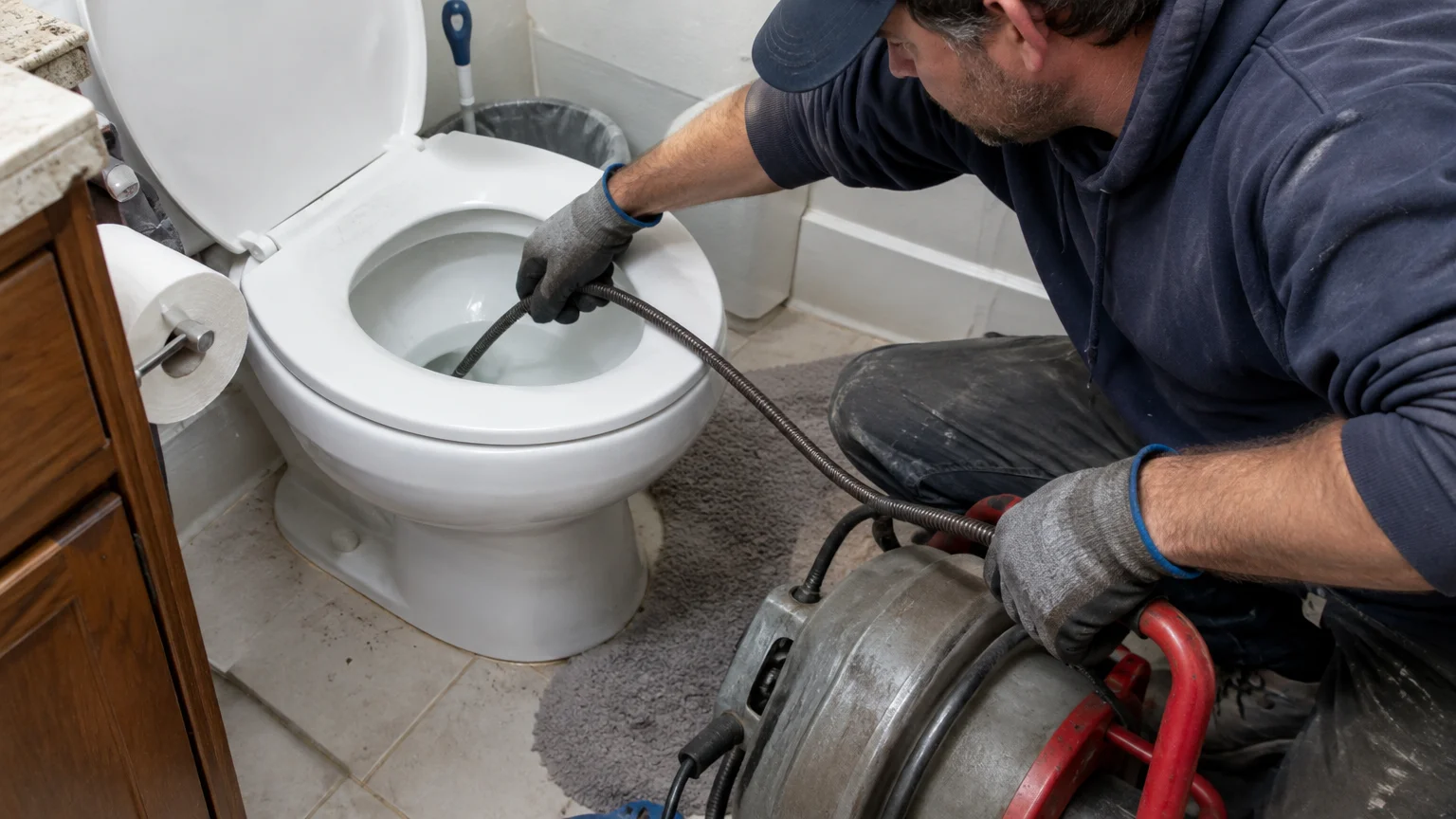
A plumbing snake is a long, flexible cable that reaches into a drain to loosen or catch a clog. If you are asking what does a plumbing snake look like, picture a metal coil with a small working tip and a handle, drum, or motor at the other end. Its shape changes by drain type and job.
A snake may look simple, but its parts have different uses. Knowing what to look for can help homeowners choose a safer tool and spot when a blockage needs professional help. Rockford Plumbing helps property owners understand drain problems and decide on a sensible next step.
Table of Contents
- What does a plumbing snake look like?
- What are the main parts of a plumbing snake?
- What does a hand-crank plumbing snake look like?
- What does a toilet auger look like?
- What does a powered drain snake look like?
- What do different plumbing snake tips look like?
- How can you tell a plumbing snake from other drain tools?
- What size plumbing snake should you use for a drain?
- How do you use a plumbing snake safely?
- When should you call a plumber instead of using a snake?
- Key takeaways
- Frequently Asked Questions
- Conclusion
What does a plumbing snake look like?
A plumbing snake usually looks like a long, coiled metal cable with a handle or drum at one end. The working tip is at the front and meets the clog first. Small hand tools may fit in one hand, while powered machines often sit on a frame or inside a drum.
The cable, tip, and handle or drum
The cable is the bendable part that enters the drain. It may look like a tight spring or a narrow metal coil. Its flexible shape helps it pass through bends in many pipes. The tip sits at the end of the cable and is made to reach or work against a blockage.
A small hand model has a grip and crank at the other end. A larger tool may have a round drum that holds the cable. Powered models often have a motor and controls. These parts help the user feed and turn the cable without holding its full length.
How its appearance changes by model
A small sink snake may fit in a drawer and have a simple hand crank. A toilet auger has a curved guide tube and a sleeve near the bowl. A larger drain machine may have a heavy base, cable drum, and foot switch.
The tool’s size does not show whether it suits a clog. A long cable can reach farther, but it can be hard to control in a small fixture. A short cable may not reach a deep blockage. The drain, pipe, and clog location all matter.
What are the main parts of a plumbing snake?
Most plumbing snakes have a flexible cable, a working head, and a way to guide or turn the cable. The exact parts depend on the model. Hand tools use a crank or grip, while powered tools use a motor and feed controls.
Flexible cable and cutting or retrieval head
The cable carries the tool through the drain. It bends with the pipe, but it must also stay firm enough to reach the blockage. A cable that is too large or stiff can scrape or harm some pipes. Follow the tool maker’s directions for the pipe and fixture.
The head is the small part at the cable’s end. Some heads are rounded to move through soft buildup. Other heads have a hook to catch hair or an edge to break up certain clogs. A retrieval head is made to bring material back out instead of pushing it farther along.
Crank, handle, drum, and power-feed components
On a hand model, the handle turns the cable. A clamp or locking knob may hold the cable in place as it feeds into the drain. A drum model stores the cable in a round case. This helps keep the cable together when the tool is put away.
Powered models may have a motor, foot switch, and control to move the cable forward or back. These parts can make the tool easier to use, but they also make it stronger. A powered snake can twist fast if its head catches. A larger machine is not always safer or better for a homeowner.
What does a hand-crank plumbing snake look like?
A hand-crank plumbing snake is a small tool with a coiled cable, a grip, and a turning handle. Many are made for smaller home drains. The cable may sit in a small drum or coil around a simple frame. A narrow tip at the front goes into the drain.
Typical size and shape of a household hand auger
A household hand auger often looks like a short cable tool with a pistol-shaped grip or small crank frame. The cable comes out through a guide at the front. Some models have a drum that holds most of the cable, while others have an open coil.
A hand tool may suit a simple clog near a sink or tub if its maker lists that drain. A homeowner may also use a small plastic drain tool to pull hair from near a stopper. That is not a metal snake, and it should not be pushed far into a pipe.
How the crank feeds and turns the cable
The crank turns the cable so its tip can work against a blockage. Feed the cable in small amounts while holding the handle firmly. If the cable meets resistance, it may have reached a clog, pipe bend, or fitting. Resistance by itself does not tell you which one it is.
A hand snake is not made to force its way through every clog. If it will not move with gentle pressure, stop and check the instructions. Forcing the tool can kink the cable or harm the drain. Rockford Plumbing can assess a clog if careful, basic steps do not clear it.
What does a toilet auger look like?
A toilet auger has a short, curved guide tube that rests near the toilet bowl. A metal cable runs through the tube and ends in a small tip. Many models also have a protective sleeve so the cable does not rub against the porcelain.
Protective sleeve and curved guide tube
The curved guide helps aim the cable through the toilet’s built-in trap. The trap is the curved path inside the toilet that holds water and helps block sewer odors. A protective sleeve covers the area near the bowl and helps prevent scratches.
The handle or crank sits near the top or rear of the tool. The user turns it to move the cable through the trap. A toilet auger’s short, curved body looks different from a straight sink snake. It is meant for toilet clogs, not every drain in a home.
How it differs from a general drain snake
A general drain snake may have a longer, exposed cable and a narrow head. Its size and shape may suit a sink, tub, or another drain. A toilet auger has a guide to follow the toilet’s path and help protect the bowl.
Using the wrong tool can cause damage. A bare metal cable may scratch porcelain, and a large cable may not fit through a small opening. Do not use a powered drain machine in a toilet unless it is made for that job and you know how to use it safely.
What does a powered drain snake look like?
A powered drain snake usually has a motor, cable, and control system. Some models hold the cable inside a drum. Others have a frame with part of the cable exposed. Many include a foot switch, which lets the operator control the motor while holding the cable.
Drum-style machines and exposed-cable machines
A drum-style machine looks like a compact motor with a round case for the cable. The drum turns as the motor runs and keeps much of the cable inside. This can reduce loose cable around the work area, but the operator still needs to control the feed and watch the cable.
An exposed-cable machine has a motor and cable that feeds out in the open. Its frame may have wheels or a stand. These tools can work on larger drains than small hand snakes, but the cable can twist if it catches. The operator needs training and safety gear.
Foot switch, motor, and cable-feed controls
The foot switch starts or stops the motor. A feed control moves the cable forward or back. Some tools have a clutch or another control for the motor. These parts help a trained user handle the cable, but they do not remove the risk of injury or pipe damage.
Powered machines are often used for larger lines or hard clogs. They may be a poor fit for an unknown pipe, a weak line, or someone without training. The motor can hide how much force the cable is using. If you are unsure, leave the work to a plumber.
What do different plumbing snake tips look like?
Snake tips come in different shapes because clogs need different approaches. A rounded tip may move through a drain, while a hook can catch some debris. A cutter head may scrape or cut certain buildup. Check the tool maker’s guide to learn which head suits each job.
Bulb, arrow, and cutter heads
A bulb head is rounded, like a small ball or loop. It can help guide the cable through a drain or work against soft material. An arrow-shaped head has a pointed form that may move into a clog. A cutter head has a wider edge for scraping or cutting certain buildup.
These heads do not work in every drain. The wrong tip can get stuck, push debris farther into a line, or harm the pipe. A cutting head can be risky in a damaged pipe or one with a weak wall. Do not pick a head based only on how the clog looks.
Retrieval and specialized attachments
A retrieval head may look like a hook or small corkscrew. It is made to catch items such as hair so they can be pulled back out. Other heads may suit certain materials or pipe conditions. Their shapes can look alike, so read the tool label.
A snake cannot safely retrieve every object. A hard item may lodge beyond the tool’s reach or get more stuck if pulled the wrong way. If a toy, cloth, or other solid item goes down a drain, stop using the fixture and ask a plumber to assess it.
How can you tell a plumbing snake from other drain tools?
A plumbing snake has a flexible cable that enters a pipe and reaches a clog. Other drain tools work in different ways. A plunger uses pressure, a drain brush scrubs an area you can reach, and a camera looks inside a line without clearing it.
Drain snakes compared with plungers and drain brushes
A plunger has a rubber cup on a handle. It uses pressure to move a blockage near the fixture. It does not have a long cable that goes inside the pipe. A plunger may help with a simple clog, but it may not reach a blockage farther down the line.
A drain brush has bristles on a narrow handle. It can clean areas you can reach, such as buildup near a stopper. It is not made to travel deep into a pipe. Homeowners can often remove and clean a stopper if they can do so safely and follow the fixture directions.
How snakes differ from cameras and hydro-jetting equipment
A drain camera has a small lens on a cable. It helps a plumber see inside a drain and find a problem. It does not usually clear the clog by itself. A camera can help show whether the issue is buildup, an object, or a damaged pipe.
Hydro-jetting equipment sends high-pressure water through a hose to clean pipes that can handle it. It differs from a snake, which uses a cable and head. High-pressure cleaning is not right for every pipe. A trained professional should check the pipe’s age, material, and condition first.
What size plumbing snake should you use for a drain?
The right snake depends on the fixture, pipe, and likely clog location. A small cable may fit a sink drain, while a toilet needs a toilet auger. Larger or deeper lines may need professional tools. The longest or thickest snake is not always the best choice.
Matching cable length and thickness to the fixture
A cable must fit through the drain opening and pass through its bends. A thin cable may be easier to guide in a small drain, but it may not be strong enough for a hard blockage. A thick cable can be harder to control and may not fit a tight pipe or fixture.
Cable length matters as well. A short tool may not reach a blockage farther down the line. A longer cable can reach farther, but it may be harder to handle and store. Check the tool label for the drains it is made for. Do not use a tool outside the maker’s limits.
Why pipe material and blockage location matter
Pipe material affects how to use a cable. Older, rusty, cracked, or fragile pipes may not take much force. A clog near a sink opening differs from a blockage in a buried sewer line. You may not be able to see the pipe’s condition from the fixture.
A clog in one sink may be a local problem. Several slow drains or gurgling toilets may point to a wider issue. In that case, a small snake may not reach or fix the cause. Drain Cleaning can help with buildup, while a plumber can check for pipe or sewer trouble.
How do you use a plumbing snake safely?
Use a plumbing snake only when its directions match the drain and you can control the tool. Feed the cable gently, turn it as directed, and pull it back slowly. Stop if it catches, the pipe seems damaged, or careful use does not clear the clog.
Basic steps for feeding, turning, and withdrawing the cable
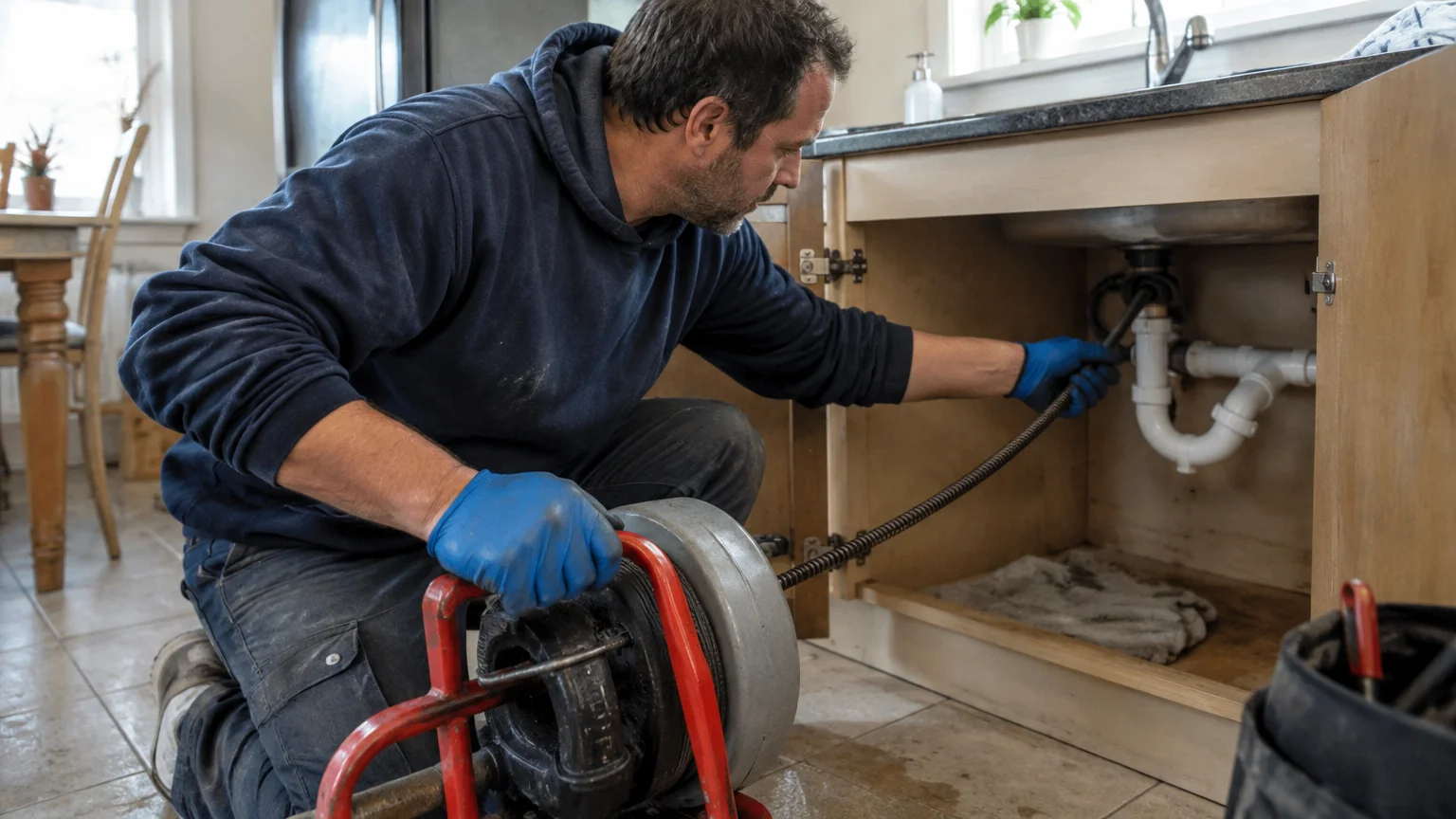
For a small hand snake, read the tool directions and clear the work area first. Wear gloves and eye protection. Remove a stopper only if you can do so safely. Keep the cable away from loose clothes, hair, and anything that could catch.
- Guide the tool’s tip into the drain without forcing it.
- Feed the cable in small amounts while turning the handle as directed.
- Pause when the resistance changes, and do not push hard against it.
- Pull the cable out slowly while controlling the length outside the drain.
- Clean the tool and test the fixture gently after you remove it.
Steps can vary by model, so follow the maker’s directions first. Never run a powered snake unless you know how to use its controls. Do not mix drain chemicals with snaking. Chemical cleaners can splash, burn skin, or react with other products.
Safety precautions and signs to stop
Keep your hands clear of moving parts, and never grab a powered cable while it turns. Switch off or unplug a machine before making changes. Wear gloves and eye protection, and keep children and pets away. Stop the tool if the cable kinks, binds, or starts to twist.
Stop if water backs up in other fixtures, sewage appears, or the drain stays blocked after a careful try. A strong chemical smell, a damaged pipe, or a tool stuck in the line also calls for help. Homeowners do not need a professional for simple checks and reachable cleaning. Risky or unclear drain work should be left to a plumber.
When should you call a plumber instead of using a snake?
Call a plumber when a blockage keeps coming back, affects more than one fixture, or comes with sewage or signs of pipe damage. These problems may be deeper than a household tool can reach. A plumber can inspect the line, choose the right tools, and help avoid making the damage worse.
Recurring or multiple-drain blockages
A clog that returns soon after clearing may have a cause still in the pipe. Grease, scale, roots, or a pipe problem may need more than a quick pass with a small snake. Forcing a cable again and again can harm a drain or push the blockage farther along.
Several slow fixtures at once may point to a shared drain or sewer problem. Gurgling, water rising in another fixture, or a bad smell can also signal trouble beyond one sink. Drain Cleaning may help with buildup, but the line should be checked if these signs return.
Sewage backups, suspected pipe damage, and difficult access
Sewage in a tub, floor drain, or toilet means you should stop using affected fixtures and seek prompt plumbing help. Avoid touching dirty water, and keep children and pets away. A plumber can look for a sewer blockage and advise you on safe cleanup. Emergency plumbing may be needed if the backup creates an urgent risk.
Cracks, leaks, soft flooring, or a cable that keeps catching may point to pipe damage. A blockage in a buried line or a hard-to-reach area also calls for proper tools and training. Rockford Plumbing serves properties, including Downtown Rockford, East Rockford, Loves Park, Machesney Park, Cherry Valley, Belvidere, and nearby communities. If a clog keeps returning, sewage backs up, or you suspect pipe trouble, Contact us to arrange professional help.
Key takeaways
- A plumbing snake has a flexible cable, working tip, and handle or motor.
- A toilet auger has a curved guide and protection for the bowl.
- The right tool depends on the fixture, pipe, and clog location.
- Homeowners can handle simple, reachable cleaning but should not force a cable.
- Recurring clogs, sewage, or signs of pipe damage need a plumber’s help.
Frequently Asked Questions
Can a plumbing snake damage a pipe?
Yes. A snake can harm a pipe if it is too large, pushed too hard, or used in a weak or damaged line. Follow the tool directions and stop if the cable binds. A plumber should check older or fragile pipes before strong cleaning.
Is a toilet auger the same as a drain snake?
A toilet auger is a kind of plumbing snake, but it has a curved guide for the toilet trap. It often has a sleeve to protect the bowl. A general drain snake may not have these parts and could scratch porcelain in a toilet.
Can a plumbing snake clear every clog?
No. A snake may clear some clogs, but it may not fix a broken pipe, deep sewer blockage, or solid object stuck in the line. If the clog returns, affects several fixtures, or leads to sewage backup, stop and ask a plumber to inspect it.
Should a homeowner use a powered drain snake?
A homeowner should use a powered snake only when it suits the drain and they know how to control it safely. The motor can twist or pull the cable with force. For an unknown pipe, hard clog, or large machine, professional help is safer.
What is the difference between a snake and a drain camera?
A snake uses a cable and tip to reach or work against a clog. A drain camera has a lens that shows what is inside the pipe. A camera can help locate a problem, but it does not usually clear it. A plumber may use both tools when needed.
Conclusion
A plumbing snake may be a hand tool, toilet auger, or powered machine. Each kind has a cable, working head, and parts that guide or turn it. To choose the right tool, match it to the fixture and pipe, then use it without force.
Simple cleaning near a drain opening may be safe for a homeowner. Recurring clogs, several slow drains, sewage, or signs of pipe damage are different. Rockford Plumbing can help property owners understand the problem and decide what to do next. Plumbing repair needs vary, and plumbing costs depend on the cause, access, and work involved; the final cost is confirmed on a quote.
If you are unsure what is causing the problem, having it checked can help you choose a safe next step. Contact us today to discuss a drain concern with Rockford Plumbing.