

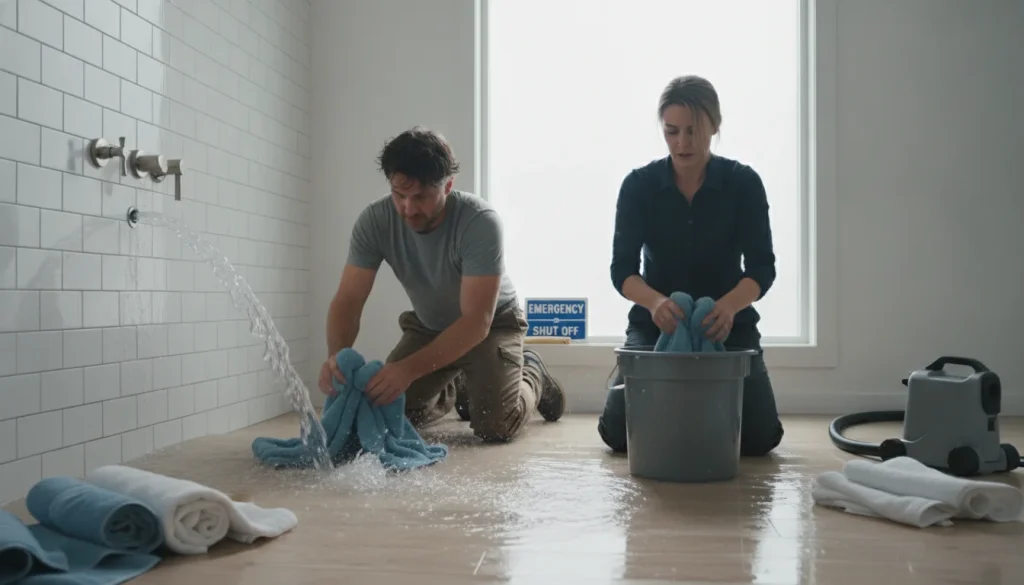
A burst pipe can spread water fast. In Rockford, the safest first steps are clear: shut off the main water valve, switch off power to wet areas, open faucets to drain lines, move valuables out of the water path, document damage, call an emergency plumber for burst pipe repair, and begin drying within 24–48 hours. These actions limit damage, reduce electrical risk, and help with insurance claims.
Key Takeaways
- Turn off the main water and electricity to wet areas immediately; then drain lines by opening faucets and flushing once.
- Protect floors and belongings, document damage with photos/videos, and start drying within 24–48 hours to lower mold risk.
- Use only safe temporary fixes (rubber wrap, clamps, epoxy putty) and avoid open flames or risky ceiling cuts.
- Call an emergency plumber when you can’t stop the leak, see ceiling sagging, or lose hot water; share shutoff status and pipe type.
What to Do When a Pipe Bursts: Quick Start
Not sure what to do when a pipe bursts? Water is spraying. Floors are getting wet. In moments like this, a calm plan matters. This guide shows simple, safe steps anyone can follow at home or work in Rockford. It explains what to do first, how to limit damage, and when to bring in a licensed pro.
If a pipe bursts, act fast. Turn off the main water valve, then switch off power to wet areas. Open cold and hot faucets to drain lines. Move items from the water path. Take photos of the damage. Call an emergency plumber for burst pipe repair and start drying within 24–48 hours.
1. Spot the Signs and Stay Safe
How to confirm a burst vs. a minor leak. A burst pipe releases water fast and wide. You may hear a pop, see a ceiling bulge, or watch the water meter spin when faucets are off. A minor leak drips slowly and often leaves a small, steady puddle. If in doubt, treat it as a burst.
Shut off electricity around wet areas. Water and power do not mix. If walls, outlets, or lights are wet, switch off the breaker to that room. Do not touch wet cords or devices. Keep kids and pets away until the area is safe and dry.
Locate your main water shutoff and why it matters. The main water shutoff valve stops water to the whole building. It is often in a basement, garage, crawl space, or a curb box outside. Turn a wheel valve right (clockwise) until tight, or a lever valve a quarter turn so it is across the pipe.
2. Stop the Water and Stabilize the Area
-
Turn off the main supply; open faucets to drain lines. Close the main valve first. Then open sinks, tubs, and outdoor spigots to relieve pressure and empty the system. Flush toilets once to clear water from the tank.
-
Shut down the water heater or boiler correctly. For gas units, set to vacation or turn the gas control to off. For electric units, switch off the breaker. Never run a heater with no water supply, as it can cause damage.
-
Contain and redirect water to protect floors and belongings. Use buckets, towels, and plastic bins to catch drips. Move rugs, electronics, and furniture. Lay aluminum foil or plastic under furniture legs to help prevent staining and swelling.
-
Document damage for insurance before cleanup. Take clear photos and short videos of wet areas, the burst spot, and any damaged items. Note the date and the room. Keep receipts for cleanup supplies and any plumber visit.
3. Temporary Fixes Until the Plumber Arrives
Apply clamps, rubber patches, or epoxy putty safely. Dry the pipe surface first. Wrap a piece of rubber (like from a hose) over the crack. Add a pipe clamp or zip ties to hold it. Epoxy putty can seal small splits if the area is clean and dry. Follow product directions.
Isolate the affected line with local shutoff valves. Many sinks and toilets have small valves on the supply lines. Turn these off to stop flow to that fixture while keeping water to other rooms. This can help you use a bathroom or kitchen while you wait.
What not to do: open flames, over-tightening, risky DIY. Do not use torches, heat guns, or space heaters on pipes. Do not crank fittings so hard that threads strip. Skip risky ceiling cuts if you see bulges near lights or wires. Safety first.
4. Dry Out, File Claims, and Prevent a Repeat
Start drying within 24–48 hours to reduce mold risk. Run fans and a dehumidifier. Open doors and cabinets to improve airflow. Remove wet baseboards and pad if needed. Bag wet materials and move them outside. The sooner you dry, the better.
When to call an emergency plumber and what to share on the call. Call for 24/7 help when you cannot stop the leak, see ceiling sagging, or lose hot water. Share the shutoff status, pipe location, material (copper, PVC, PEX), and visible damage. Mention photos and any temporary fixes you applied.
Prevention: insulation, heat tape, drip strategies, and maintenance. Insulate pipes in attics, crawl spaces, and garages. Use heat tape where allowed. In a hard freeze, let faucets drip and open sink cabinets to warm the pipes. Service your water heater, schedule leak detection, and test the main shutoff twice a year. Booking Drain Cleaning before the next storm can also help keep drains flowing so water has a clear path away from your property.
Rockford Plumbing works across the city every week helping homes and small businesses with burst pipe repair, leak detection, and emergency plumbing services. In colder months in Rockford, pipes near exterior walls and unheated spaces need extra care. Rockford Plumbing can inspect insulation, test valves, and plan simple steps for winter protection across the Rockford area.
Frequently Asked Questions
How do I find my main shutoff fast? Check where the water line enters the home, often near the water heater, a front wall, or in a basement or garage. Look for a wheel or a lever on a main pipe. Outside, there may be a curb box by the street. Turn it off and test a faucet.
Should I search for an emergency plumber near me or try DIY? If water is flowing or ceilings are swelling, call an emergency plumber. Do simple, safe steps only: shut off water and power, drain lines, and protect belongings. Temporary patches can help, but a licensed pro should do a lasting fix and check for hidden damage.
Can I still use water in other rooms after a burst? If you can isolate the bad line with a local shutoff, you may use water elsewhere. Keep usage low to avoid leaks re-starting. If you closed the main valve, water is off to the whole building until the plumber completes pipe repair and the system is tested.
Conclusion
A burst pipe is stressful, but a clear plan keeps damage down. Shut off water, make the area safe, drain lines, and start drying at once. Document the damage and get help from a licensed emergency plumber for a full repair and safety check. For fast response, trust Rockford Plumbing for urgent plumbing repair, water heater service, and drain cleaning. Now you know what to do when a pipe bursts—keep this guide handy to act fast and stay safe.
Need urgent help in Rockford? Contact us.
This guide is for homes, rentals, and workplaces in Rockford, Illinois. It supports quick action and safe choices for property owners and tenants alike.
Summary
- Turn off main water and power to wet areas, then drain lines immediately.
- Protect belongings, photograph damage, and begin drying within 24–48 hours.
- Use safe temporary fixes and call an emergency plumber for burst pipes and hidden damage checks.