Commercial restroom fixture upgrades help Rockford businesses improve hygiene, cut water waste, and ease strain on drains and pipes. By replacing old toilets, urinals, faucets, and sinks with sturdy, efficient models, owners can reduce clogs and leaks and keep restrooms looking clean and modern for staff and visitors.
A store manager walking into a restroom often sees what customers see too: stained toilets, dripping faucets, and worn sinks. Even if the rest of the building looks neat, that restroom sends the wrong message. In many buildings around Rockford, the restroom is one of the most used spaces but often the last part to get an update.
Table of Contents
- Why should businesses consider commercial restroom fixture upgrades?
- Which commercial restroom fixtures matter most for a professional image?
- How do you choose the right commercial toilets and urinals for your building?
- What should businesses look for in commercial faucets and sinks?
- How do plumbing codes and ADA requirements affect restroom fixture upgrades?
- What does the upgrade process for commercial restroom fixtures typically involve?
- How can businesses maximize long-term value from new restroom fixtures?
Why should businesses consider commercial restroom fixture upgrades?
Businesses should plan commercial restroom fixture upgrades because restrooms shape how people feel about the whole building. Modern fixtures are cleaner, easier to use, and use less water. They also help control leaks, prevent water damage, and lower the risk of plumbing problems that can shut down restrooms or even part of the business.
Old toilets, urinals, and faucets often use more water than needed and clog or drip more often. That means more service calls, more time spent on complaints, and more strain on the commercial plumbing system and drains. Over time, that extra wear can lead to pipe damage, water heater stress, and hidden leaks behind walls or under floors that need drain repair and emergency plumbing help.
How outdated fixtures affect impressions and staff satisfaction
Guests and staff judge cleanliness by what they see and touch. Stained bowls, loose toilet seats, slow drains, and dripping faucets send a clear signal that upkeep is behind. Even when a restroom is cleaned often, worn fixtures can still look dirty or feel hard to use.
Staff notice these problems too. A restroom that is easy to clean, with strong flush valves and touchless faucets, saves time for cleaning crews and cuts daily stress. For offices, restaurants, schools, and medical spaces in Rockford, better restrooms can help staff feel that owners care about comfort and safety.
Operational and maintenance benefits of modern fixtures
Modern toilets, urinals, faucets, and sinks are made to use less water while still working well. Water-efficient toilets and urinals with the EPA’s WaterSense label can lower flush volumes without hurting performance when installed the right way and paired with the right valves and piping.^watersense
Better fixtures can also lower wear on commercial water heaters and drain lines. Fewer clogs and drips mean fewer urgent calls for emergency plumbing and less risk of damage to walls, floors, and tenant spaces. Over several years, these day-to-day gains can matter more than the short-term work of the upgrade.
Which commercial restroom fixtures matter most for a professional image?
The fixtures people notice first in a restroom are the ones they use: toilets, urinals, faucets, and sinks. These set the feel for the entire space. When these core fixtures look clean, work well, and feel solid, people often assume the rest of the plumbing and building systems are in good shape too.
In busy commercial spaces, details like water pressure, flush strength, and drain speed also shape the visit. A toilet that keeps running, a sink that splashes, or a faucet that is hard to turn on is annoying and can create more cleaning work. When these basics work smoothly, guests spend less time in the restroom and leave with a better impression of the Rockford property.
Toilets, urinals, and partitions: core elements guests notice first
Commercial toilets and urinals must handle high traffic without constant care. Pressure-assisted or flushometer toilets provide strong, steady flushes that help prevent repeat flushes and clogs. Well-placed grab bars, solid partitions, and privacy screens also affect how safe and comfortable the room feels.
Urinals play a key role in men’s restrooms. Choices range from standard models to high-efficiency or even waterless styles. When matched with the right drainage and venting, they can help control odors and reduce splashing. Easy-to-clean, durable partitions and hardware complete the picture by keeping each station private while still simple to wipe down.
Faucets, sinks, handwashing stations, and accessories that complete the space
Handwashing areas are where users face the mirror and see the full space. Modern handwashing stations with well-sized sinks, smooth counters, and lined-up soap and towel dispensers help limit water on the floor and keep lines moving. This is also where many people judge water temperature and pressure.
Touchless faucets and soap dispensers cut down on shared touch points and can help control how much water is used for each wash. Deep sinks and the right faucet height help reduce splashing. Matching accessories such as grab bars, hooks, and baby changing stations add to safety and ease of use, especially in family and accessible restrooms.
How do you choose the right commercial toilets and urinals for your building?
Choosing the right toilets and urinals starts with how the restroom is used each day. A quiet office will have different needs than a stadium, school, or busy restaurant in Rockford. Building owners should think about traffic levels, user needs, water supply, drain layout, and long-term service when they pick fixtures.
The right mix of gravity toilets, pressure-assisted toilets, and flushometer valves depends on the building’s plumbing design. A commercial plumber can look at pipe sizes, venting, and water pressure to help avoid weak flushes, noisy operation, and repeat clogs that later need drain cleaning.
Key decisions: flush valves, water efficiency, and performance
Flush valves control how much water flows through the toilet or urinal and how fast it moves. Many commercial fixtures use flushometer valves mounted on the wall. These can be manual or sensor-operated and must match the fixture’s rated flow for best results.
Water-efficient toilets and urinals can lower total water use when they are matched with the right valves and sound piping. In some cases, upgrading old high-volume toilets to modern models can reduce load on the sewer line and local system. But going too low on flush volume in an older building may cause drain issues and more clogs, so balance is important.
Accessibility, traffic volume, and layout considerations
Every commercial restroom must balance capacity with comfort and privacy. Large spaces may need more toilets, urinals, and accessible stalls to handle peak times. Smaller restrooms may need compact fixtures that still meet code clearances and keep good paths to drains.
Accessibility is more than a code box to check. It affects how people with mobility devices, parents with children, and older guests move through the space. Proper seat heights, clear turning space, and well-placed grab bars help reduce falls and make the restroom usable for more people.
A commercial plumber can help Rockford Plumbing review fixture choices and decide how many toilets and urinals each restroom needs, where partitions should go, and how to route the drains so they tie into the main commercial plumbing system with fewer future clogs.
What should businesses look for in commercial faucets and sinks?
Businesses should look for faucets and sinks that are durable, easy to clean, and matched to how the space is used. A school, hospital, or busy shopping center restroom sees many quick handwashes every day. Those spaces need fixtures that stand up to constant use and help people wash well without splashing water across counters and floors.
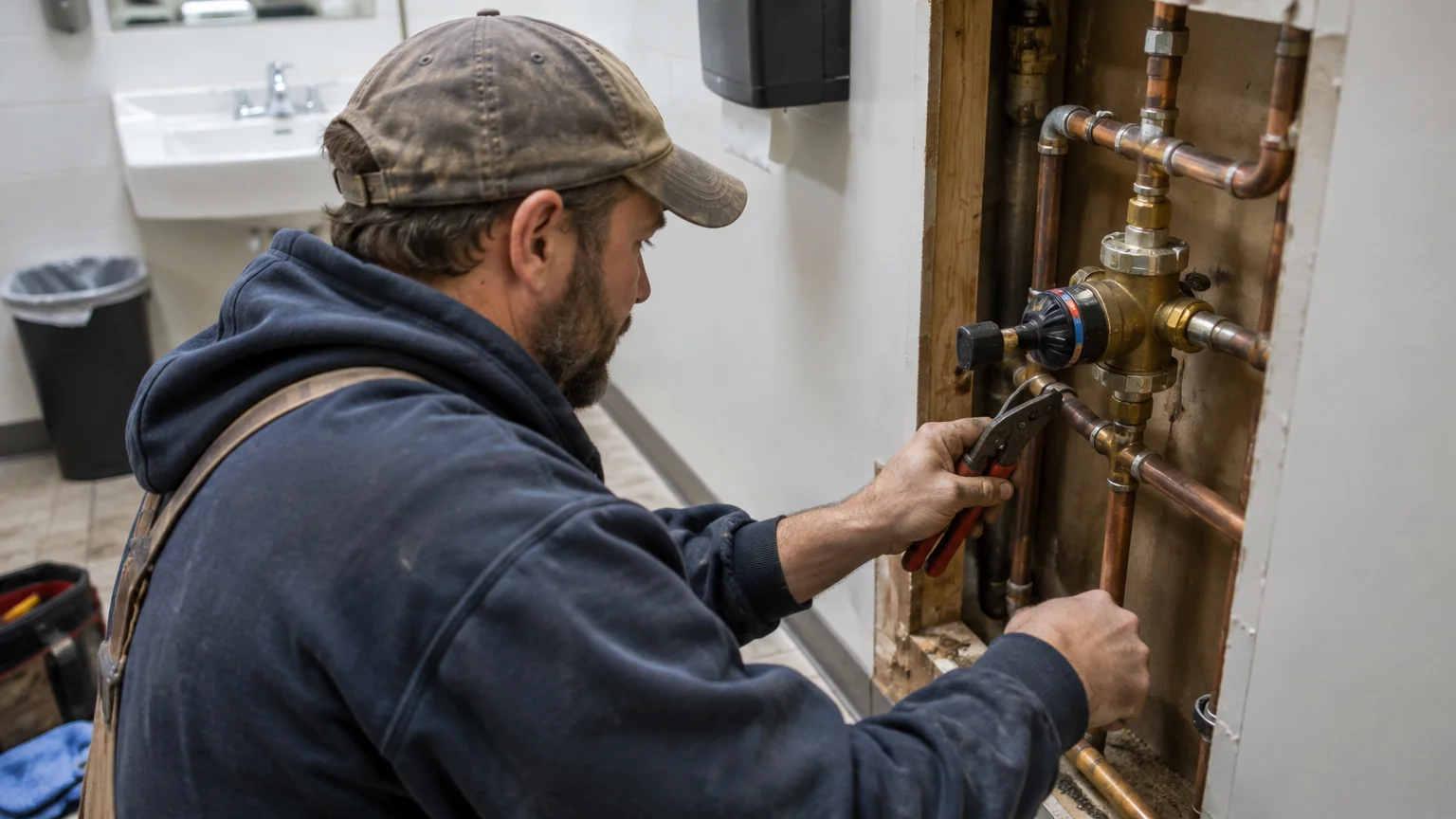
Owners should also think about how water temperature is controlled. Mixing valves and thermostatic mixing valves blend hot and cold water to a safe set point so users do not get burned. These devices work with commercial water heaters to give steady temperature at several fixtures at the same time.
Touchless vs. manual faucets: hygiene, convenience, and durability
Touchless faucets use sensors to start and stop water flow when hands are under the spout. This cuts down on shared touch points and can control how long the water runs. Many Rockford businesses choose touchless faucets in high-traffic restrooms for both hygiene and water savings.
Manual faucets, such as lever or wrist-blade styles, still work very well in many settings. They can be easier to service and do not rely on batteries or power for a sensor. For some facilities, a mix of touchless faucets in public restrooms and manual faucets in staff areas is a practical, balanced choice.
Sink sizes, materials, and mounting styles for different industries
Sink choice affects both comfort and cleaning time. Deeper bowls help reduce splashing and work well in restrooms where people also fill water bottles or rinse items. Wide trough-style sinks with several faucets can work well in schools, arenas, and other places with crowd surges.
Materials like vitreous china, solid surface, and stainless steel all have good uses. Smooth, non-porous surfaces help resist stains and make disinfection simpler. Mounting styles include wall-hung sinks, countertop drop-in bowls, and integrated solid-surface counters with built-in basins. The right style will depend on how often the restroom is cleaned and who uses it.
In all cases, sinks and faucets should match the building’s water heater capacity so hot water reaches the tap quickly without overloading the heater. This is especially important when restrooms share a commercial water heater with kitchen or laundry equipment.
How do plumbing codes and ADA requirements affect restroom fixture upgrades?
Plumbing codes and ADA rules set the base standards for safe, usable restrooms. They guide how many fixtures a building needs, where those fixtures sit, how drains and vents are set up, and how much space is required for people using mobility devices. Commercial restroom fixture upgrades should follow the plumbing, building, and accessibility rules that apply in Rockford.
Most areas use the International Plumbing Code or Uniform Plumbing Code, often with local changes set by the city or state. These codes define things like pipe sizes, venting, trap arm lengths, and backflow protection. A licensed commercial plumber checks all of these details before and during a restroom upgrade.
Essential plumbing and building code issues to confirm before upgrading
Before changing fixtures, a plumber will look at the existing water supply, drain lines, vents, and shutoff valves. They confirm that pressure, temperature, and pipe sizing will support new toilets, urinals, and faucets without causing low water pressure, noisy pipes, or repeat clogs.
They also check whether backflow protection is in place to help keep dirty water from reaching the drinking water supply. In some buildings, upgrades may also trigger fire, ventilation, or structural checks under the building code.
Permits are often needed for commercial restroom work. Inspectors may want to see rough-in plumbing before walls are closed and then a final check once fixtures are installed.
Meeting ADA accessibility standards for toilets, sinks, and clearances
The Americans with Disabilities Act (ADA) sets detailed rules for accessible restrooms, such as clear floor space, maximum reaches, grab bar placement, and fixture heights.^ada Restroom upgrades must keep or improve accessibility, not reduce it.
For toilets, this means correct seat height, centerline distances, and enough room beside the toilet for a wheelchair transfer. For sinks, it affects knee clearance, counter height, and the ability to reach faucets and soap without strain.
Door swings, hardware, mirrors, and accessories also matter. A commercial plumber working in Illinois should coordinate with designers or accessibility experts to be sure upgraded fixtures and layouts stay within ADA and local accessibility codes.
What does the upgrade process for commercial restroom fixtures typically involve?
The upgrade process for commercial restroom fixtures usually starts with an assessment and ends with testing and cleanup. Along the way, the owner, plumber, and sometimes a designer decide which fixtures to keep, which to replace, and whether piping or water heaters need changes to support the new setup.
The exact steps depend on the age of the building, the number of restrooms, and whether the space can close during work. Some projects can be done one restroom at a time to keep others open. Others, such as full remodels in office towers or shopping centers, need tight schedules and careful staging.
Planning, assessment, and selecting the right commercial plumber
A commercial plumber starts by walking the space, checking current fixtures, and looking at access to shutoff valves, risers, main drains, and the commercial water heater. They may open ceiling tiles or access panels to see how pipes run between floors.
Together with the owner or property manager, they discuss goals: better image, more water savings, fewer clogs, better accessibility, or all of the above. From there, they suggest fixture brands, flush valves, faucet types, and layout changes that fit the building and how people use it.
Choosing the right plumber means looking for proper licensing, insurance, and experience with commercial plumbing and ADA-compliant restroom upgrades. For complex projects that touch gas-fired water heaters or boiler systems, it may also involve coordination with a gas line plumbing specialist.
Scheduling work, minimizing downtime, and coordinating other trades
Once fixtures and scope are set, the team agrees on timing. Work often happens during off-hours, overnight, or on weekends to limit downtime. In some buildings, crews shut down one restroom stack at a time so people always have access to at least one working restroom.
Commercial restroom projects often need coordination with other trades, including electricians for lighting and hand dryers, carpenters for partitions and framing, and tile or flooring installers. A clear plan helps avoid delays and surprise changes.
During the final stage, the plumber tests every toilet, urinal, faucet, and drain for leaks, correct operation, and proper hot water delivery. They check that toilets do not keep running and that water shuts off fully at each faucet. Any issues get fixed before the restroom reopens.
Frequently Asked Questions
How often should a commercial restroom be upgraded?
Many commercial restrooms are refreshed about every decade, but it depends on traffic and wear. Owners should consider upgrades sooner if fixtures clog often, drip, look badly worn, or no longer meet code or ADA rules. A quick plumbing inspection can help decide the right timing.
What causes low water pressure in commercial bathrooms?
Low water pressure can come from undersized piping, clogged supply lines, partly closed valves, failing pressure regulators, or issues with the building’s main supply. Old galvanized pipes can also restrict flow. A plumber will test pressure at several points and track the problem back to the most likely source.
Why does a toilet keep running in a commercial restroom?
A toilet that keeps running usually has a problem with the flush valve, flapper, or fill valve. Worn seals or parts that are not set right let water keep flowing from the tank or flushometer into the bowl. This wastes water and can stress the plumbing, so it should be fixed quickly by cleaning or replacing parts.
Can businesses safely handle any restroom repairs themselves?
Staff can safely handle simple tasks like tightening loose seats, cleaning aerators, clearing small surface clogs with a plunger, and checking for visible leaks. Anything that involves opening walls, changing valves, adjusting gas or electric water heater settings, or cutting into pipes should be left to a licensed commercial plumber.
Do commercial restroom upgrades affect the water heater?
Yes. New fixtures can change how much hot water is used at once and how fast. Low-flow faucets and efficient toilets may reduce total demand, but added restrooms or new shower areas can increase it. A plumber will compare fixture counts to the commercial water heater size to confirm it can keep up.
How can businesses maximize long-term value from new restroom fixtures?
Businesses can get the most long-term value from new fixtures by pairing commercial restroom fixture upgrades with simple, steady maintenance and smart water and energy use. Good habits keep fixtures looking new, help prevent leaks and clogs, and support even hot water delivery to all handwashing stations and any showers on the same system.
Clear cleaning plans, quick repairs, and regular checks of valves and seals help fixtures last longer. This is one area where a little attention each month lowers the odds of sudden plumbing emergencies later and helps avoid larger drain repair jobs.
Key takeaways
Smart maintenance habits make a big difference. Simple steps include:
- Walkthrough checks to look for drips, slow drains, or toilets that keep running.
- Cleaning aerators and strainers on faucets and shower heads to keep flow even.
- Listening for hissing or running water when restrooms are empty, which can hint at hidden leaks or clogs.
- Checking water heater settings so temperatures stay safe and steady at all fixtures.
Water and energy-saving strategies also matter. WaterSense-labeled fixtures, well-set occupancy sensors, and timed flush valves can trim wasted water.^watersense2 Insulating hot water lines and pairing fixtures with the right commercial water heater type can help hot water arrive faster and reduce heat loss.
Conclusion
Commercial restroom fixture upgrades are about more than looks. They help protect the building, support staff and visitor comfort, and work with the commercial water heater, drains, and sewer lines. Careful choices in toilets, urinals, faucets, and sinks can lower water use while still giving strong, reliable performance in busy Rockford restrooms.
For property owners and managers, working with an experienced local team like Rockford Plumbing keeps the process on track from design to final testing.
[^watersense]: EPA WaterSense is a voluntary program that helps identify water-efficient products.
[^ada]: The U.S. Department of Justice publishes the 2010 ADA Standards for Accessible Design.
[^watersense2]: The EPA provides WaterSense guidance for commercial buildings and facilities.
If you are not sure what you are dealing with, it is worth having someone look at it before it turns into a bigger job. Get in touch with Rockford Plumbing today and we will tell you where you stand.